Fencing in Castle Rock, CO
Expert fencing services in Castle Rock and the greater Denver metro — call (720) 737-8308 for a free consultation.
Fencing Services in Castle Rock, Colorado
Castle Rock's rural-adjacent character means properties include everything from split-rail and board-and-post agricultural fencing to conventional residential privacy panels — a diverse market that Blackpine Hardscapes serves with equal expertise. We build Castle Rock fences for the full range of property types, from downtown historic lots to large-lot rural properties in Douglas County where wildlife exclusion and perimeter definition are primary goals.
At Blackpine Hardscapes, we bring over 20 years of Colorado hardscaping experience to every project in Castle Rock. We understand Douglas County's soil conditions, HOA requirements, and the climate challenges that affect every outdoor installation in this region. Every project is designed from scratch for your specific property, vision, and budget.
Get a Free QuoteFencing in Castle Rock — What to Expect
Our process covers every detail so your project in Castle Rock is stress-free from design through installation.
Choosing the right fence material for Colorado
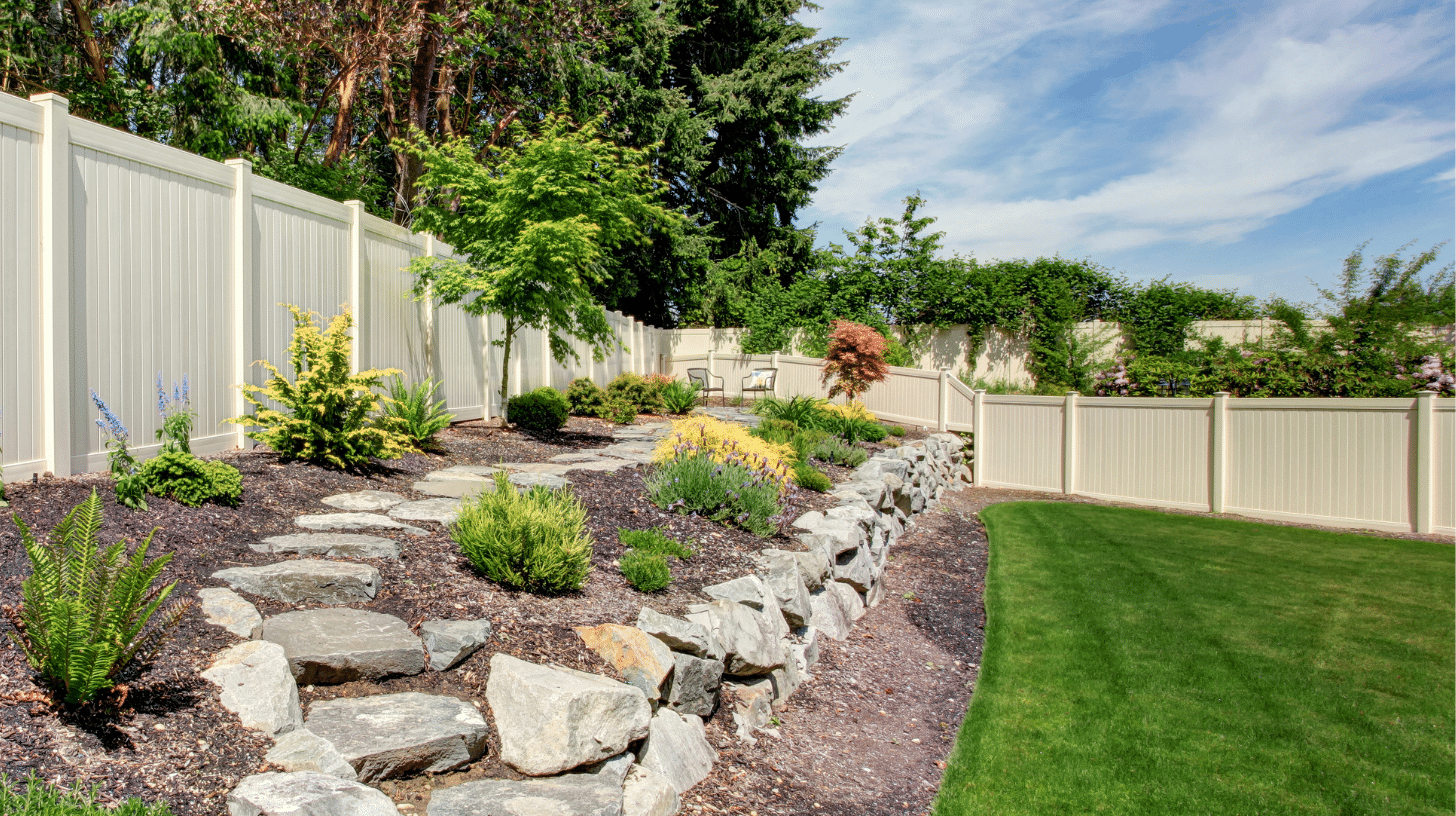
Colorado's climate makes fence material selection more than an aesthetic decision. UV at Aurora's elevation degrades polymers and bleaches pigments faster than coastal or humid climates. Freeze-thaw cycling works on post bases and any material that absorbs moisture. And a bad hailstorm in Colorado's hail belt turns thin wood panels or budget vinyl into a repair project. What holds up here is different from what holds up in most of the country.
Cedar is the best natural wood option for Colorado. Its natural oils resist rot and insects without treatment, and it takes stain well, which lets homeowners maintain the natural wood look that vinyl can't replicate. The specification is Western Red Cedar specifically, not Eastern cedar or spruce. Pine and spruce lack the oil content that protects cedar and need treatment within two years to avoid rapid graying and deterioration.
Vinyl (PVC) fencing is the dominant low-maintenance option in Aurora's residential market. Quality vinyl won't rot, needs no painting or staining, and holds its color under Colorado UV when the polymer includes adequate titanium dioxide. Vinyl quality varies considerably. Thick-walled cellular PVC from established manufacturers is far more impact-resistant and UV-stable than the thin single-wall product that fills the budget end of the market. The difference becomes visible within about five years in Colorado's climate.
What quality installation looks like below the surface
Post setting is where most fence installations succeed or fail, and where shortcuts are most common. Aurora's frost depth is 36–42 inches, which means posts set in concrete at less than that depth will start showing movement within two to three winters as frost cycles push them upward. Posts set at 24 or 30 inches — which happens on rushed residential jobs — never hold long-term. We set posts at 42 inches minimum with a flared footing at the bottom.
Post hole diameter gets overlooked but matters. A 6-inch hole barely fits a 4x4 post with concrete around it. An 8 to 10-inch hole gives adequate concrete depth to resist lateral loads from wind and impact. In Aurora's clay soil, we add a gravel collar at the bottom of each hole to improve drainage around the post base, which is where moisture causes rot and corrosion to start.
Fastener selection is easy to get wrong on cedar fence installations. Cedar's natural oils accelerate corrosion of un-galvanized steel, and the rust stains bleed through the wood face within a few seasons. We use Type 316 stainless or hot-dipped galvanized fasteners exclusively on wood fence work. The cost difference over a 200-foot fence is minimal compared to what a corrosion-related repair or replacement costs.
Permits, HOA requirements, and property lines in Aurora
Fence permitting in Aurora: fences over 6 feet require a building permit, front yard fences are subject to height limits and sight-line restrictions at intersections, and corner lot fences need particular attention to the sight-line triangle at intersecting streets. Installing in a sight-line zone without a proper permit review can result in a mandatory removal order. That's an expensive fix after the fence is already in the ground.
Property line location is more contentious than most homeowners expect. Aurora properties don't always have clearly marked corners, and neighbors frequently disagree on exact boundaries. We recommend getting a property survey before installing a fence on any boundary shared with a neighbor, especially when replacing an existing fence that may have been set in the wrong location years ago.
HOA fence requirements layer onto permit requirements in Aurora's master-planned communities. Common specifications include maximum height for rear and side fences, material requirements (cedar or vinyl in many communities, no chain link where it's visible), color restrictions, setback distances from property lines, and in some communities, restrictions on fence types near open space or trail corridors. We review current HOA documents before every fence installation, not old documents from the previous owner.
Previous Projects.
Why Blackpine Hardscapes
Why Work With Blackpine Hardscapes in Castle Rock?
We've been serving Castle Rock and Douglas County homeowners for over 20 years. Here's what that experience looks like on your project.
- Free 3D design consultation before any commitment
- Family-owned and operated — Jose leads every job
- Licensed, insured, and fully compliant with Colorado and Douglas County standards
- Premium weather-resistant materials built for Colorado's climate
- Bilingual team — hablamos español
- Transparent pricing — no hidden fees, no surprise change orders
What Our Customers Say
"We contacted Blackpine for a massive concrete project — adding to our front driveway, creating a more elegant walkway, replacing sidewalk, replacing our RV pad, and building a giant concrete patio. They checked all the boxes: locally owned, shared our vision, very competitive pricing, and confident professionalism. Jose's design input was invaluable and his family crew was always polite. The concrete turned out absolutely amazing. My boys ride their bikes on it every day and we get compliments from neighbors constantly."
— Brian
Fencing in Castle Rock — Frequently Asked Questions
What fence materials work best in Colorado?
Vinyl (PVC) fencing is the top low-maintenance choice in Colorado — it resists UV fading, moisture, and doesn't need painting or staining. Cedar is the best natural wood option, as it resists rot and insects. Aluminum is ideal for decorative open fencing. Chain link is most economical. We do not recommend pine or spruce for fence boards in Colorado's climate.
How much does fence installation cost in Aurora CO?
Fence installation costs in Aurora depend on material and height. Vinyl privacy fence: $35–$55 per linear foot. Cedar privacy fence: $25–$45 per linear foot. Aluminum decorative fence: $30–$50 per linear foot. Chain link: $15–$25 per linear foot. A 150-foot fence runs approximately $3,750–$8,250 for vinyl privacy.
Do I need a permit for a fence in Aurora CO?
Fences over 6 feet in Aurora require a building permit. Front yard fences are subject to additional height restrictions (typically 4 feet max). Corner lot fences have sight-line requirements. HOA communities have their own fence rules that supersede city ordinances. We review all requirements before installation.
How deep do fence posts need to be in Colorado?
In Aurora's frost zone, fence posts must be set a minimum of 42 inches deep (below frost line) in concrete to prevent frost heave. Posts set too shallow will shift, lean, and fail within a few seasons. We use a minimum 6-inch diameter hole and quality post-mix concrete for every installation.