
Deck Construction in Littleton, CO
Expert deck construction services in Littleton and the greater Denver metro — call (720) 737-8308 for a free consultation.
Deck Construction Services in Littleton, Colorado
Littleton's mature neighborhoods — from bungalows near downtown to ranch homes backing open space in Ken Caryl — often feature aging wood decks that need either major repair or full replacement with modern composite materials. Blackpine Hardscapes assesses Littleton decks for structural integrity first, then recommends the most cost-effective path: targeted repair, composite reboard, or complete demo and rebuild.
At Blackpine Hardscapes, we bring over 20 years of Colorado hardscaping experience to every project in Littleton. We understand Jefferson County's soil conditions, HOA requirements, and the climate challenges that affect every outdoor installation in this region. Every project is designed from scratch for your specific property, vision, and budget.
Get a Free QuoteDeck Construction in Littleton — What to Expect
Our process covers every detail so your project in Littleton is stress-free from design through installation.
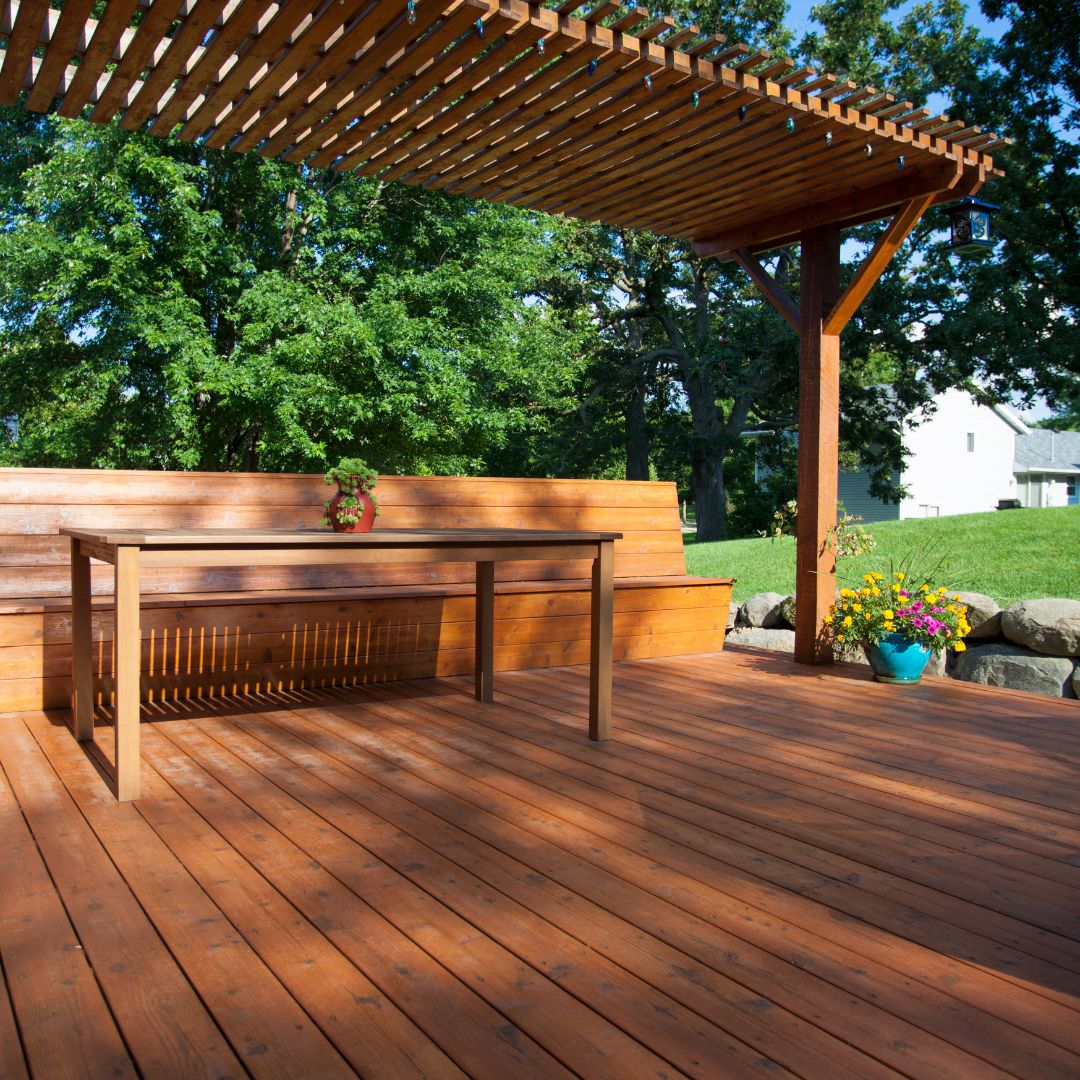
Deck design for Colorado's climate
Aurora homeowners want decks they can actually use from April through October. That means accounting for afternoon hail, intense UV, and the temperature swings that make a simple platform uncomfortable for much of the day. Decks here regularly incorporate shade structures, post-mounted heaters, and at least one covered section. A bare platform works on the coast. Colorado decks need to work harder.
Material selection matters more in Colorado than most climates. Pressure-treated pine is still the cheapest option, but Colorado's UV grays it out and splinters it faster than humid climates do. It needs annual maintenance to stay presentable. Composite decking — Trex, TimberTech, AZEK — handles the conditions much better. It resists fading, moisture, and temperature swings without annual sealing. The upfront cost premium typically pays back in reduced maintenance within 10 years.
Multi-zone configurations have become the standard for Aurora deck remodels. A 10x20 platform does one thing. A designed deck has distinct areas for dining, lounging, and grilling, with a built-in bench, a railing cap doubling as a bar counter, a lower landing connecting to the yard, and a pergola over the dining section. The difference between a deck that gets used daily and one that stores patio furniture is almost entirely in that kind of design thinking.
Structural requirements and permitting for Colorado decks
Any deck over 18 inches above grade in Aurora requires a building permit. The review covers footing depth (Aurora's frost depth runs 36–42 inches, so footings must reach at least that deep to avoid seasonal movement), ledger attachment and flashing, beam and joist sizing for the calculated load, and railing height and baluster spacing.
Footings are the structural element homeowners think about least and that matters most. Aurora's freeze-thaw cycle causes frost heave, which pushes shallow footings upward and takes the deck frame with them. Helical piers or poured concrete piers set below frost depth stay put through decades of Colorado winters. We never shortcut footing depth to save a little money.
Ledger attachment, where the deck connects to the house, is the other Colorado-specific concern. Older Aurora homes with brick or stone veneer complicate standard attachment methods. We use through-bolted connections and proper flashing systems that keep water out of the gap between the ledger and house sheathing. That gap is where most deck-related rot and water damage starts in attached systems.
Composite decking: what actually matters
The big composite brands are Trex, TimberTech, and AZEK. All three hold up in Colorado. The differences that actually matter at purchase time are heat retention, scratch resistance, and warranty terms.
Heat retention is a real issue on west-facing decks. Composite surfaces can reach 150°F in direct afternoon sun, hot enough to make bare feet uncomfortable and cut the usable hours down significantly. Lighter colors run cooler. Some product lines include heat-dissipating coatings that make a genuine difference. For decks with significant afternoon exposure, we bring this up early in the design conversation rather than after the color has been chosen.
Major composite brands offer 25–30 year fade and stain warranties, but what's covered varies a lot. Products without a protective capping layer have shorter real lifespans in Colorado's UV environment than capped composite or PVC products, regardless of what the warranty says. We walk through warranty terms during material selection. A deck that costs $5,000 less upfront but warrants poorly ends up being the more expensive deck over 20 years.
Previous Projects.
Why Blackpine Hardscapes
Why Work With Blackpine Hardscapes in Littleton?
We've been serving Littleton and Jefferson County homeowners for over 20 years. Here's what that experience looks like on your project.
- Free 3D design consultation before any commitment
- Family-owned and operated — Jose leads every job
- Licensed, insured, and fully compliant with Colorado and Jefferson County standards
- Premium weather-resistant materials built for Colorado's climate
- Bilingual team — hablamos español
- Transparent pricing — no hidden fees, no surprise change orders
What Our Customers Say
"We used Blackpine for our entire backyard project. They helped with rock removal, prepped the yard for sod installation, rerouted our whole irrigation system perfectly, and ran drip lines. Incredible work from start to finish."
— Satisfied Client
Deck Construction in Littleton — Frequently Asked Questions
What decking materials work best in Colorado?
Composite decking (Trex, TimberTech, AZEK) is the top choice for Colorado because it resists UV fading, moisture, and temperature extremes without requiring annual sealing or staining. Pressure-treated pine is the most economical option. Cedar and redwood offer natural beauty but require more maintenance in Colorado's dry, UV-intense climate.
How much does a deck cost in the Denver metro?
Deck costs in Aurora/Denver vary by material and size. Pressure-treated decks run $25–$40 per sq ft; composite decks run $45–$75 per sq ft; premium hardwood or exotic wood runs $65–$100+ per sq ft. A 300 sq ft deck runs $7,500–$22,500 depending on material and features.
Do you need a permit to build a deck in Aurora CO?
Yes. In Aurora and most Denver metro municipalities, a building permit is required for any deck over 18 inches above grade. The permit covers structural engineering, footing depth, ledger attachment, and railing requirements. We handle all permits and inspections.
How long does deck construction take?
A standard 300–400 sq ft deck takes 1–2 weeks to build after permits are approved. Permit approval in Aurora typically takes 1–3 weeks. Complex decks with multiple levels or custom features may take 3–4 weeks total installation time.